The Best Flooring for Humid Climates (and What to Avoid)
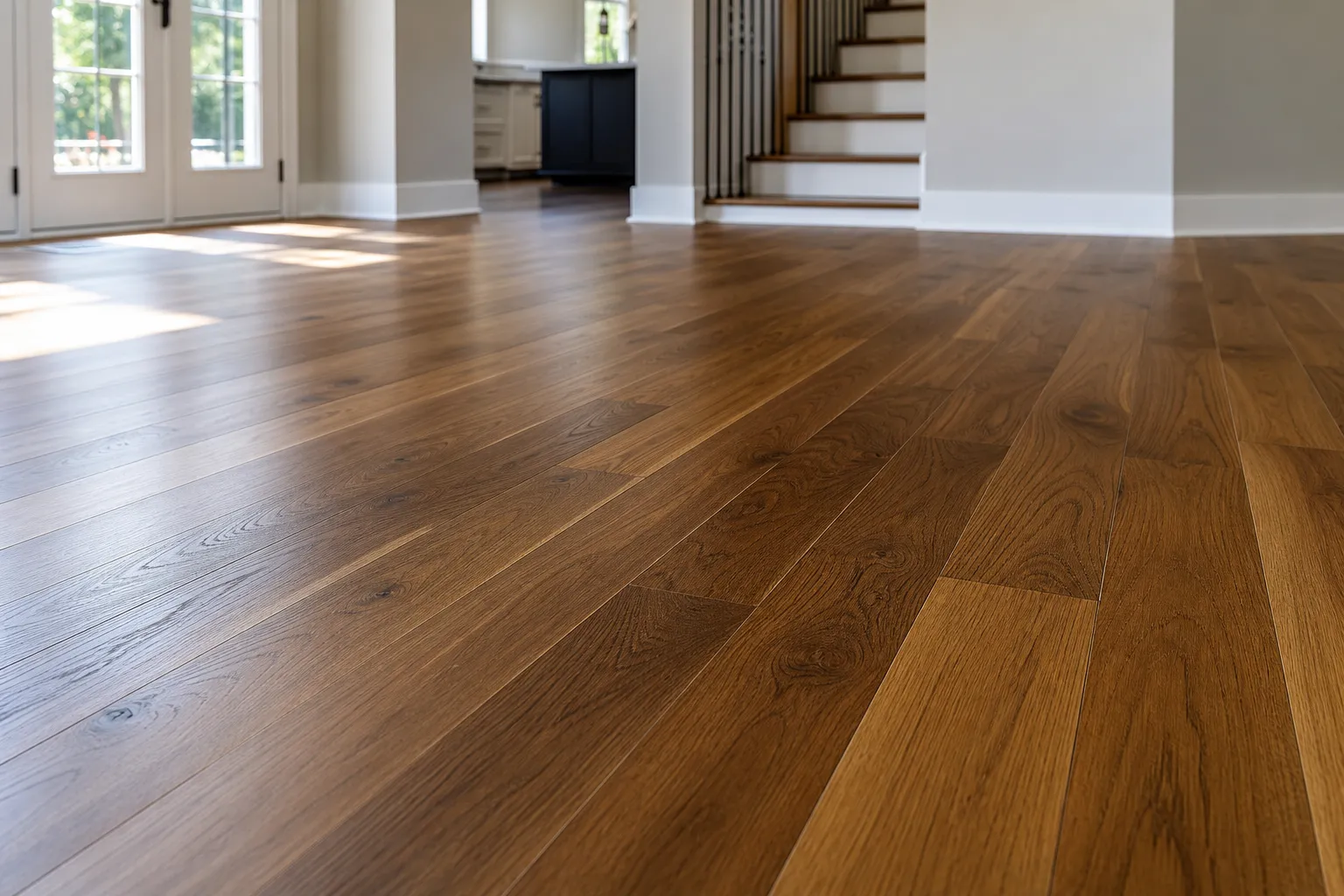
The best flooring for a humid climate is porcelain tile, luxury vinyl plank (LVP), and engineered hardwood. All three resist swelling, warping, and mold. Solid hardwood and uncoated materials do not hold up as well. Solid hardwood can still work in a humid house, but only with real acclimation and humidity control.
Sprayway Remodeling has installed flooring across Houston since 1999. Call (713) 348-9004 and the crew will help you pick the right material for your home, your budget, and Houston's humidity.
What Is the Best Flooring for a Humid Climate?
For most Houston homes, the safest picks are:
- Porcelain tile. The ANSI A137.1 standard calls porcelain "impervious." It absorbs 0.5 percent water or less. It will not swell, stain, or feed mold growth the way a more porous material can.
- Luxury vinyl plank (LVP) and luxury vinyl tile (LVT). Modern LVP and LVT resist water. They do not expand or contract the way wood does.
- Engineered hardwood. It has a layered core. That core resists the movement that warps a solid wood board.
- Ceramic tile and natural stone. Both hold up well in kitchens, bathrooms, and entryways. Those are the rooms that see the most moisture.
Sprayway's own flooring FAQ says it plainly: tile, luxury vinyl plank, and engineered hardwood all handle humidity well. Solid hardwood can work too, with proper acclimation. The crew helps each homeowner match a material to their budget and the room it is going in.
Why Does Humidity Damage Some Flooring and Not Others?
It comes down to how much water a material soaks up. The ANSI A137.1 standard grades tile by water absorption. Impervious tile, mostly porcelain, absorbs 0.5 percent or less. Vitreous tile absorbs up to 3 percent. Semi-vitreous goes up to 7 percent. Non-vitreous absorbs more than that. The lower the absorption, the less a tile swells, stains, or grows mold in a humid room.
Wood works differently. It is organic, so it naturally takes on and releases moisture. The National Wood Flooring Association (NWFA) recommends keeping indoor humidity between 35 and 55 percent for wood floors. Most manufacturer warranties require that range year-round. Once humidity climbs to 60 or 70 percent, solid wood faces a real risk of cupping and gapping. Above 70 percent, the risk turns to swelling and buckling. Engineered hardwood holds steady through that same range. Its layered core resists the movement a solid board cannot.
That gap matters here. The air conditioner, not the season, decides what humidity actually hits your floor. Houston gets about 50 inches of rain a year on average (NOAA climate data), and that keeps outdoor humidity high most months. Indoors, humidity creeps up any time the AC is undersized, off, or the house sits closed up during a slow leak.
What Flooring Should You Avoid in a Humid House?
Be careful with these:
- Solid hardwood without acclimation. Solid wood is not off-limits in Houston. But it needs time to acclimate to your home's humidity before it goes in. Your home's indoor humidity needs to stay in the NWFA's recommended range after that. Skip either step and cupping or gapping follows.
- Carpet in moisture-prone rooms. Carpet and carpet pad hold moisture and dry slowly. That is a problem in bathrooms, entryways, or any room near a known leak risk.
- Porous, uncoated natural stone. Some natural stone needs sealing to resist moisture the way porcelain does on its own. Ask what sealing schedule a stone choice needs before you pick it for a humid room.
- Any flooring over an unchecked subfloor. The material matters less than what is under it. Even a humidity-rated floor can fail over a damp, unleveled subfloor.
Is Engineered Hardwood Really Better Than Solid Hardwood Here?
For most Houston homes, yes, with one honest caveat. Engineered hardwood holds up well all the way into the 60 to 70 percent humidity range. That is exactly where solid wood starts to risk cupping and gapping. In a Gulf Coast house, where indoor humidity will not always sit in a perfect range, that extra room matters.
That does not make solid hardwood off-limits. Sprayway's own position, given to every flooring customer, is that solid hardwood can work with proper acclimation, and the crew helps each homeowner pick the right material for their home and budget. The real difference is room for error. Engineered hardwood tolerates more humidity swing before it shows a problem. Solid hardwood needs tighter, steadier humidity control to look the same way in five years.
How Does Sprayway Prep a Subfloor for a Humid Climate?
Before any material goes down, Sprayway checks and preps the subfloor. That means leveling it, patching low or damaged spots, and making sure moisture will not cause problems later. For glue-down floors, that also means taking slab moisture readings before installation, not after a problem shows up.
Houston's older houses make this step matter more. About 47 percent of the city's housing units were built before 1980 (Census ACS data). A pre-1980 slab or subfloor was rarely built with today's vapor barriers in mind. Skip the moisture check on a home like that, and even a good material choice can still turn out bad.
In one Houston project, Sprayway installed vinyl flooring as part of a room renovation. The crew protected the home's existing carpet and walkway during the work, so nothing else in the house took damage along the way. Every flooring job, large or small, carries Sprayway's one-year workmanship warranty and satisfaction guarantee.
Still deciding on a material? Start with our flooring installation service to see the full lineup, or check what flooring installation costs in Houston before you set a budget. Flooring is also a common add-on inside a full home renovation. Sprayway has installed flooring for homes across the Houston area since 1999.
Get a free estimate from Sprayway Remodeling, and the crew will help you pick a material built to handle Houston's humidity.
Talk to Sprayway Remodeling
Questions about your remodeling job? We serve Houston and the surrounding area with honest, upfront advice.
Related articles
FAQ
Related questions
What flooring doesn't warp in humidity?
Porcelain tile, luxury vinyl plank, and engineered hardwood hold up best. Porcelain barely absorbs water. Engineered hardwood has a layered core that resists the swelling that warps solid wood. Laminate and vinyl tile also hold up well, as long as the subfloor underneath was checked first.
Is engineered hardwood good for a humid climate?
Yes. The National Wood Flooring Association says engineered hardwood stays stable even up into the 60 to 70 percent humidity range. Solid wood starts to cup and gap well before that. That extra room for error is why engineered is the safer pick in most Houston homes.
Does humidity affect laminate flooring?
It can, but the real risk is what is under it. Laminate resists surface moisture well on its own. The problem shows up when it sits on a damp or unchecked subfloor. That is why Sprayway checks the subfloor before any floor goes down, and takes slab moisture readings before any glue-down vinyl plank.