Water Damage at Home: What to Do in the First 24 Hours
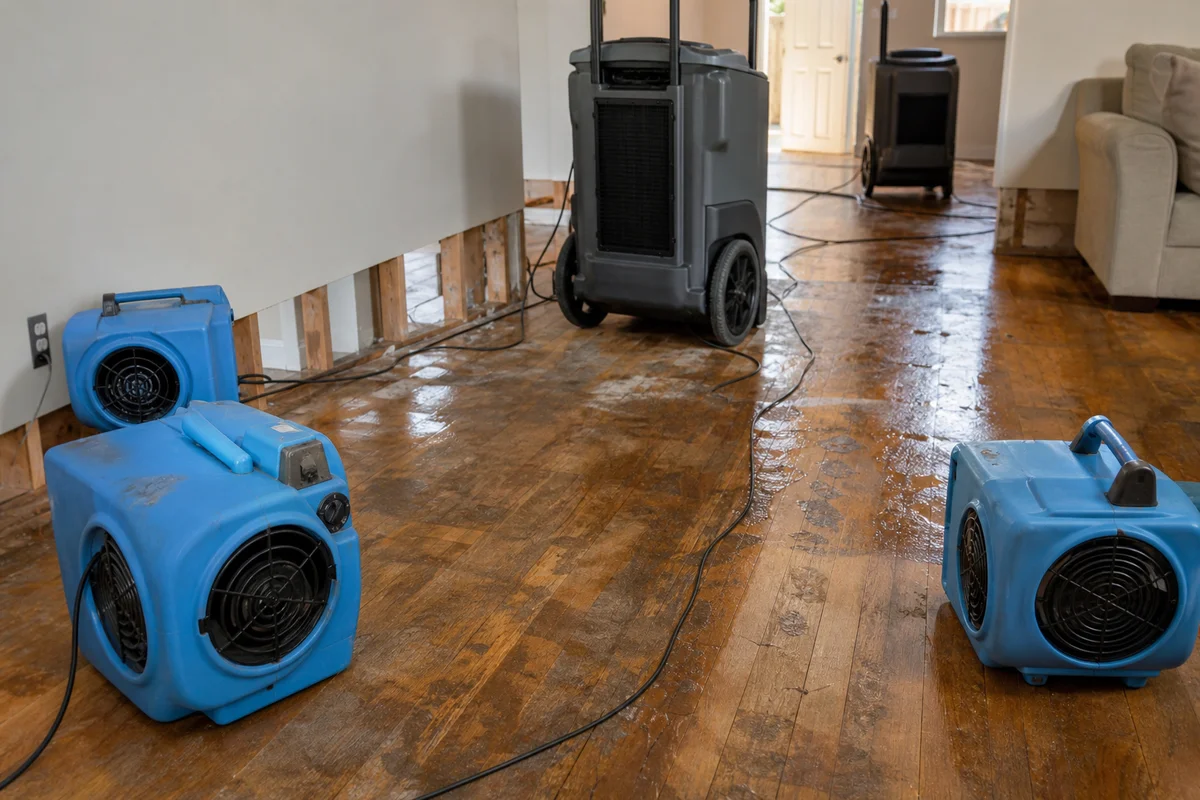
Shut off the water source, cut power to any wet area at the breaker, and get people and pets clear of standing water. Photograph the damage before you touch anything. Then call a restoration contractor. In Houston's humidity, water spreads into drywall, flooring, and framing fast, and mold risk starts within 24 to 48 hours.
Sprayway Remodeling runs 24-hour emergency service for water damage calls across Houston. Call (713) 348-9004 and a crew starts working to stop the damage from spreading.
What to Do in the First Hour After Water Damage
The first hour decides how much of your home you keep. In order:
- Stop the source. Shut off the water main if the leak is from inside the house. If the water is coming from a storm or a roof leak, the main will not help, so focus on stopping it from getting worse, like covering a hole with a tarp.
- Cut power to wet areas. Standing water and electricity do not mix. Shut off the breaker for any room with water on the floor before anyone walks through it.
- Get people and pets out of standing water. Do not wade through it if outlets or appliances are nearby.
- Photograph everything. Wide shots of each room, then close-ups of the worst damage. Do this before you move anything. Your insurer will ask for this.
- Move what you can. Furniture, electronics, rugs, and anything sentimental. Get it up off the wet floor or out of the room entirely.
- Call a restoration contractor. The clock matters more than almost anything else in this list.
How Fast Does Water Damage Actually Spread?
Faster than most homeowners expect. Water wicks into drywall and baseboards within minutes. Carpet padding is usually a total loss inside a few hours. Untreated moisture can start growing mold within 24 to 48 hours, especially in a humid climate. Wood floors and cabinets start warping the longer they sit wet.
That timeline is why a homeowner should not wait to see if a spot "dries on its own." By the time it looks dry on the surface, the material underneath may still be soaked.
Should You Turn Off the Water Main?
If the leak is a burst pipe, a failed water heater, or an overflowing fixture, yes. Find the main shutoff, usually near where the water line enters the house or at the meter, and turn it off before you do anything else. That stops the leak from getting worse while you wait for help.
If the water is coming from outside, storm runoff, a roof leak, or flooding, the main shutoff will not stop it. In that case, the priority is stopping water from continuing to enter, covering a roof breach with a tarp or diverting water away from an entry point, and then getting a restoration crew out fast.
Do You Need to Document the Damage Before Cleanup?
Yes. Photograph and, if you can, video every affected room before you remove anything or start drying it out. Insurance adjusters work from documentation, and damage that gets cleaned up or thrown out before it is photographed is harder to claim. Keep receipts for anything you buy to deal with it: fans, a wet vac, or a place to stay if you cannot be in the house.
Sprayway documents conditions with moisture readings and photos as part of every restoration job, giving you the written record and repair estimate your insurer needs to support your claim.
Why Houston Homes Are Especially at Risk
Houston gets about 50 inches of rain a year (NOAA climate data). Harris County also logged 64 hail events and 85 thunderstorm wind reports from 2023 to 2025, with a top gust near 104 mph. A lifted shingle, a cracked vent boot, or a wind-driven window leak is a routine call here. It is not rare.
The Gulf Coast humidity matters too. Wet materials dry out slower here than in a dry climate. A small leak that might dry on its own elsewhere stays wet longer in Houston. That raises the odds of mold if it is not caught and dried the right way.
Houston's older homes add one more risk. 47% of the city's houses were built before 1980 (Census data). A leak near a wall in one of these homes often means original plumbing or wiring is involved. That is not a quick surface dry-out. It needs someone who can open the wall, check what is behind it, and rebuild it right.
When to Call a Restoration Contractor Instead of Doing It Yourself
A wet vac and a box fan can handle a small, contained spill you caught immediately. Call a professional when any of these apply:
- The water came from a pipe, appliance, or the roof, not something you spilled.
- The water sat for more than an hour or two before you found it.
- It reached drywall, insulation, subfloor, or cabinets.
- You are not sure how far it spread behind walls or under flooring.
- The source involved electrical wiring or a gas appliance.
Sprayway handles the full job as one crew: emergency response, cleanup, drying, and the rebuild. Drywall, flooring, paint, cabinets, whatever the water damaged. That means no handoff between a cleanup company and a separate contractor, and no gap where the job stalls waiting for the next crew to show up.
What Happens After the Water Is Gone
Drying out the space is only the first half of the job. Once moisture readings confirm the walls, floor, and framing are back to normal, the rebuild starts: replacing drywall, flooring, trim, and cabinets to match what was lost. If the damage reached framing or plumbing, that work may need a permit, and Houston has its own rules for what gets permitted and who files it.
Restoration cost depends on how far the water spread, how much tear-out and drying the job needs, and how soon the cleanup started. Faster response shrinks the rebuild, which is one more reason the first 24 hours matter as much for your wallet as for your home.
Sprayway Remodeling has handled water damage restoration and rebuilds across Houston since 1999. Owner Juan Vides is a licensed, insured contractor, and every job carries a satisfaction guarantee. See our restoration process or call now if you are dealing with water damage today.
Get a free estimate from Sprayway Remodeling.
Talk to Sprayway Remodeling
Questions about your remodeling job? We serve Houston and the surrounding area with honest, upfront advice.
Related articles
FAQ
Related questions
Will insurance cover water damage cleanup?
Often, yes, if the damage is sudden and accidental, like a burst pipe. Slow leaks and flood damage from rising water are usually handled differently by your policy. Sprayway documents the damage with photos, moisture readings, and a written repair estimate, but call your insurer first to confirm what your policy covers.
How do you dry out a house after water damage?
Professional dry-out uses industrial air movers and dehumidifiers, not household fans. Sprayway checks moisture levels in the walls, floor, and framing, not just the surface, and keeps drying until those readings are back to normal. Stopping early is the most common reason mold shows up weeks later.
Should I turn off the water main after a leak?
Yes, if you can find it and the leak is from a pipe or fixture inside your home. Shutting off the main stops more water from entering while you call for help. If the water is coming from outside, like a storm or a roof leak, the main will not help, and stopping the source outside is the priority instead.